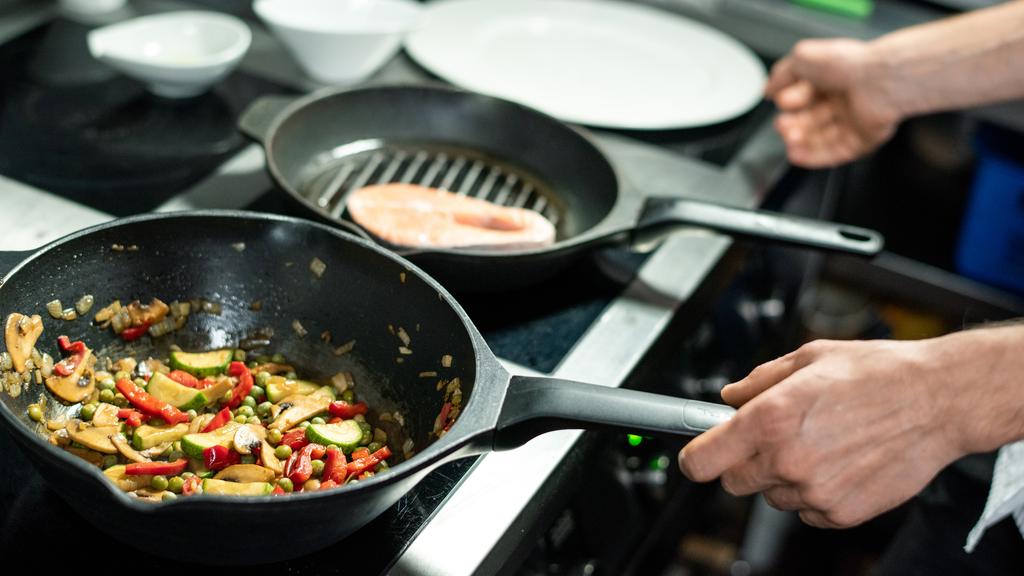
Using the correct pan for your job will help make the difference between success and failure in cooking. Each style of pan (cast iron, stainless steel, and non-stick) has positive characteristics to assist with various jobs and requirements in the kitchen. Once you know what makes each pan unique, you'll be able to make educated decisions to improve your cooking experience and quality of food.
Cast iron pans
Cast iron pans have long been recognized as extremely durable, versatile, and highly effective. Most people have a set of these pans in their kitchen. The durability of cast iron pans come from pouring molten iron into molds; this is what provides cast iron pans with their weight and strength. So let's take a look at why you should consider choosing cast iron.
Why cast iron?
There are several reasons why cast iron pans are popular among chefs. First and foremost, cast iron retains heat better than almost all other materials. Therefore, cast iron is perfect for cooking products that require a lot of heat for a prolonged period of time. The first step in achieving that perfectly browned crust on a piece of beef is to preheat your cast iron pan on a medium to high heat for 5-10 minutes prior to starting your recipe. This provides enough heat to create the Maillard reaction, a chemical reaction that produces great flavor and color.
Secondly, cast iron pans are virtually indestructible. When maintained properly, a good quality cast iron pan can be used for decades. One reason for this longevity is that they can withstand very high temperatures (not only on the stovetop but also in the oven). This flexibility makes it possible to go directly from cooking a product in a skillet on the stovetop to finishing it in the oven. Examples of products that benefit from this type of transition include frittatas and corn bread.
Lastly, One of the most satisfying parts about owning cast iron pans is developing a natural non-stick surface called seasoning. Seasoning occurs through heating oil into the pores of the metal; resulting in a slippery surface that increases flavor and reduces fat usage.
Caring for cast iron
As mentioned earlier, although cast iron is durable, it requires special care to ensure it continues to function properly. Don't use soap as it can remove the seasoning. Clean with hot water and a stiff-bristled brush after every use. If there are tough pieces of food remaining in the pan, you can lightly scrub them off with kosher salt. Dry the pan completely after cleaning to prevent rust, then apply a thin layer of oil to protect the seasoning.
Never subject your cast iron pans to extreme temperature variations. Extreme temperature fluctuations can result in thermal shock, which could crack your pan. To Avoid this, always slowly increase the heat during cooking, and never rapidly decrease the heat when removing the pan from the heat source.
Common mistakes using cast iron
Many users fail to preheat their cast iron pan sufficiently before cooking. Food tends to adhere to unheated cast iron pans, rendering useless their inherent non-stick capabilities. Users also frequently don't use enough oil when cooking in their cast iron pans, especially while the seasoning is building. Many times, a thin layer of oil is sufficient; however, this may vary depending upon the particular ingredient being cooked and its fat content.
In addition, users sometimes store food within their cast iron pans. This action can lead to acidic ingredients reacting with the metal and thus imparting undesirable flavors. Moreover, storing food in your cast iron pan may damage the seasoning.
Stainless steel pans
For those familiar with stainless steel pans, they are likely aware of their versatility and strength. Constructed from a combination of steel and chromium, stainless steel pans have a shiny appearance that is visually appealing and serves multiple purposes. Now we'll examine the ways in which stainless steel pans may serve your culinary endeavors.
Benefits of stainless steel
One of the greatest benefits associated with stainless steel pans is their ability to distribute heat evenly across their surfaces. As such, stainless steel pans are ideal for applications where uniformity of temperature is important. In general terms, stainless steel pans work exceptionally well for browning and searing proteins because they are capable of maintaining high temperatures without deforming. A significant advantage of stainless steel is that it is non-reactive; therefore, it will not alter the taste of acidic substances such as tomatoes, wine, or citrus based sauces.
The fact that stainless steel pans are extremely durable lends itself well to utilizing metal utensils rather than relying on fragile non-stick alternatives. Additionally, since most stainless steel pans are dishwasher-safe (although hand-washing is typically preferred), cleaning is also made simpler. Furthermore, stainless steel pans are very adept at deglazing, after searing protein, adding a tablespoon or two of wine or broth to the pan and scrapping the browned material from the bottom results in a delicious base for sauce.
Using stainless steel successfully
To ensure food does not stick in a stainless steel pan, simply preheat the pan. To check if your pan is heated enough to cook with (and prevent food from sticking), try performing the mercury ball test: place your stainless steel pan on a medium-high heat setting and drop 2-3 drops of water into it. If the droplets form beads and move around the pan freely, your pan is ready for use. The mercury ball test will ensure that your food releases easily and forms a nice brown crust.
Cleaning stainless steel
Cleaning your stainless steel pan will typically involve soaking it in hot soapy water until any debris dislodges from the surface. Baking soda paste (made by mixing baking soda with water) can also be employed as an abrasive when needed to eliminate stuck-on residue. Never utilize steel wool on your stainless steel pan as it can create scratches.
Mistakes with stainless steel pans
One mistake that individuals often commit while working with stainless steel pans is overheating them. Overheating your stainless steel pan can result in food adhering to it and/or burning (especially if you're not paying close attention). Typically medium or medium-high heat settings are sufficient for most tasks.
Additionally, many users forget to preheat their stainless steel pan appropriately before beginning their recipe. Failing to preheat your pan before adding oil or ingredients will inevitably hinder the quality of your finished dish.
Finally, many users neglect to deglaze their stainless steel pan after cooking protein. Deglazing accomplishes several things: it cleanses your pan while simultaneously creating a rich sauce that takes full advantage of the browned bits left behind.
Non-stick pans
Non-stick pans are an invaluable resource for anyone looking to cut back on fat usage while also reducing cleanup time post-cooking. Non-stick pans possess a coating that prevents food from bonding with the surface of the pan, thereby allowing for delicate items to be cooked easily while minimizing mess.
Positive attributes of non-stick cookware
Non-stick pans excel when preparing tender foods that are prone to sticking such as scrambled eggs or crepes. As a result, non-stick pans enable you to prepare healthy meals by using little-to-no fat. Due to their ease-of-use and lightweight design, non-stick pans are an excellent option for beginners and/or busy professionals who lack time.
Cleaning non-stick pans
Cleaning non-stick pans can be relatively simple: merely clean with warm water and soap; occasionally a gentle wiping with a damp cloth may be required. Cleaning your non-stick pan with anything abrasive can cause irreparable damage to its non-stick properties.
Care & maintenance for your non-stick pan
Careful consideration must be given when caring for your non-stick pan to preserve its surface. Use only wooden, plastic or silicone utensils when cooking with non-stick pans as metal utensils can scratch the non-stick coating. Washing your non-stick pan by hand using mild detergent will extend its life span (harsh chemicals contained within dishwasher cleaners can degrade the non-stick surface).
Non-stick coatings degrade at high temperatures
It is essential to recognize that non-stick coatings can break down quickly at high temperatures. It is recommended that you operate at low-medium temperatures when cooking with non-stick cookware.
Mistakes using non-stick cookware
Heating your non-stick pan empty before placing food in it can degrade the coating prematurely. At all times prior to commencing heating your non-stick pan, add a small amount of oil or butter. Do not attempt high-temperature techniques (broiling or oven-roasting) unless specifically indicated on your pan packaging that such procedures are acceptable for use with that model.
Frequently overcrowding your non-stick pan also produces poor results
Just as overcrowding any cooking vessel leads to inconsistent results, overcrowding your non-stick pan produces similar problems: poor browning/crust formation, inadequate texture and slow cooking rates. Provide adequate space in your non-stick pan for steam to escape; this enables optimal drying conditions necessary for successful browning and crispiness.
Q&a section:
Can i use my cast iron pan on a glass top stove?
Yes, but with caution! Because cast iron pans are extremely heavy (often weighing more than 8 pounds!), it can damage/scratch/gouge your glass top stove if not handled carefully. Always lift your cast iron pan when moving it from storage or when placing it on your glass top stove. Position your pan carefully on the stove and gently put it into position.
Is an investment in a set of stainless steel pans worthwhile?
If you cook frequently (more than once per week), yes! While stainless steel pans may present more challenges than non-stick pans when it comes to cleaning; their performance in browning/searing food cannot be beat!
How often will i need to replace my non-stick cookware?
While regular care will prolong the life of your non-stick cookware; eventually you'll need to replace it. This can occur anywhere from 3-5 years depending on frequency of use! Look for signs that indicate replacement: worn-out scratches on surface of pan; peeling/flaking non-stick coating; inability to remove sticky residue from surface of pan regardless of cleaning efforts.
Choosing the correct type of cookware for the job
Once you understand what attributes separate each type of cookware (non-stick vs. Cast iron vs. Stainless steel); you'll find yourself better prepared to select the perfect cookware for each specific cooking Task and produce superior results!