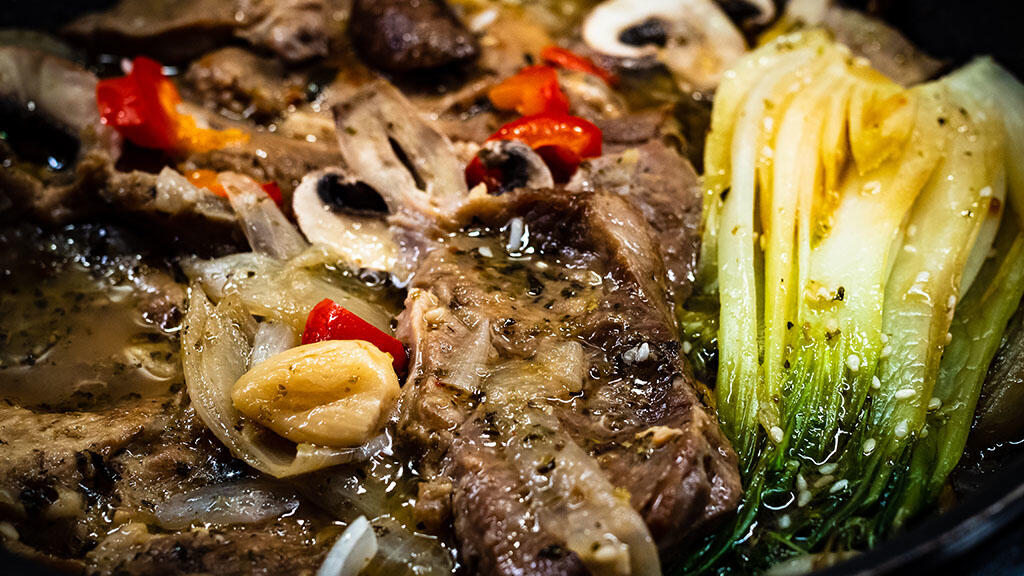
Good cooking is rarely about a single ingredient, but rather about creating Layers of flavor through many steps of preparation. When professional chefs refer to “building flavor” they mean building Layers of flavor. Layering flavor is simply adding different levels of complexity while cooking a dish versus just seasoning a dish at the end. Think of building flavor like playing chords in music. One note may be pleasant, however, playing three or four notes produces a richer and more harmonious tone. At different points in preparing a dish different flavor compounds are developed. Some occur during the heating process. Others come from fat. Other flavor compounds remain dormant until an acidic component or a fresh herb is added towards the end of cooking. Even though skipping a layer in preparing a dish won’t spoil the dish completely, incorporating each layer significantly increases the overall quality of the dish.
Below is the 4-stage approach to building Layers of flavor. This 4-stage approach is easy to remember and can be applied across many types of dishes in many different cuisines – e.g., a French braise, Thai stir-fry, or Italian ragu. We’ll describe each layer below.
Aromatics -- the flavor base (stage 1)
Each great dish has an aromatic foundation. An aromatic foundation consists of vegetables, herbs and/or spices that have been cooked in fat at the beginning of preparing a dish. The most well-known aromatic foundation used in western cooking is called “the holy trinity.” the “holy trinity” includes onion, carrot and celery. Bell peppers are commonly substituted for carrots in Cajun cooking. Garlic, ginger and scallions are typical aromatic foundations found in many Asian cuisines.
Why do i need to cook my aromatics before cooking everything else?
When you cook your aromatics at the beginning of preparing a dish in fat – whether oil, butter, etc. – you’re causing chemical reactions that release volatile flavor compounds. Those flavor compounds dissolve into the fat. Fat is an excellent carrier of flavors; therefore, it carries these flavors throughout your entire dish. For instance, a stew prepared by throwing raw vegetables into cold water will never taste as rich as one that begins with sautéed onions in olive oil.
How can i maximize the value i get from my aromatics?
- Don’t rush them. Onions take anywhere from 8-10 minutes to turn translucent and sweet when cooking at medium heat. If you rush the process by increasing the heat too much you’ll produce bitter and irregular flavors.
- Use the right fat. Butter adds sweetness and richness. Olive oil provides fruitness. Animal fats such as lard or duck fat provide a deeper savory flavor. Choose based on what type of flavor you want to emphasize.
- Bloom your spices. Most dry spices such as cumin, coriander, or paprika should be added to your hot fat for 30-60 seconds prior to adding your liquids. Blooming your spices allows the fat soluble flavor compounds contained in your spice blend to be activated and not locked inside the spice itself.
- Add Garlic late. Garlic burns easily and rapidly loses its flavorful properties when burned. Add Garlic after your onions are tender and only cook it until it’s fragrant (about 60 seconds).
Fond -- the brown bits are golden (stage 2)
Once you’ve tenderized your aromatics, you now begin to develop another important layer of flavor as you brown your protein or vegetables. When you sear your protein or vegetables in a hot pan, you cause two events to occur: First, surface moisture evaporates and second, the maillard reaction begins. The maillard reaction is named after French chemist Louis-Camille Maillard who identified it in 1910. He described it as occurring when amino acids and sugars react to high heat (typically above 280 degrees fahrenheit). The maillard reaction develops hundreds of new flavor compounds that contribute to the distinctive savory, nutty, complex flavor associated with foods that have been browned.
The by-product of the browning process is fond – the dark, caramelized residue that remains attached to the bottom of your pan. Many home cooks mistakenly wipe off their fond because they think it’s charred food. In reality, it’s the richest source of flavor in your entire pan – and it’s essential for developing the next stage of flavor development.
Developing your own good fond
- Dry your protein. Remove excess moisture from your protein (meat) before searing with paper towels. Excess moisture creates steam, which prohibits browning and prevents development of fond.
- Don’t overcrowd the pan. Overcrowding your pan results in lowering the temperature of your pan and causes steam instead of sear. Cook proteins in batches if needed.
- Use a stainless steel or cast iron pan. Non-stick pans don’t produce effective fond. Both stainless steel and cast iron pans have surfaces that permit the maillard reaction to create flavor deposits on the surface of the pan.
- Let it rest. Let your protein sit still in the pan until it releases naturally – typically 3-4 minutes per side. If your protein adheres to the pan, it hasn’t yet reached sear status.
Deglazing -- releasing all available flavors (stage 3)
Deglazing is when we get to see real magic happen. After creating fond, you now add a liquid (wine, stock, Beer, Vinegar or water) to your pan while it’s still hot. When you pour the liquid into your hot pan, it immediately hits the surface and creates a burst of steam and instantly dissolves all remaining fond from the bottom of the pan and transfers all remaining flavors from the bottom of the pan into your sauce. Perhaps one of the best bang-for-the-buck techniques in cooking exists here: in less than 30 seconds you capture all available flavor compounds that were sticking to the bottom of the pan and turn them into liquid Gold.
Selecting your best choice of deglazing liquids
You select a liquid for deglazing based upon its own flavor contribution to the final dish. Consider:
- Red wine — provides tannins, acidity and depth; useful for red meat braising and beef stews
- White wine — offers lighter acidity and floral notes; suitable for chicken, fish and cream-based sauces
- Stock (beef, chicken or vegetable) — provides Neutral and savory flavors; usable in virtually any savory application
- Beer — contributes bitterness and malty characteristics; useful for braised pork or onion-based soups
- Vinegar/citrus juice — extremely acidic; use sparingly; useful for producing a bright/sharp note in a pan sauce
- Water — useful in a pinch; however, contains no additional flavor;
Properly deglazing
Remove your browned protein from the pan. Lower the heat slightly and add your chosen deglazing liquid. With a wooden spoon or heat-resistant spatula remove all remaining fond from the bottom of the pan as your deglazing liquid simmers. Allow your deglazing liquid to reduce by approximately one third prior to adding additional ingredients. By doing so you concentrate the flavors released from the fond and eliminate any raw alcohol if you chose to use wine.
Finishing -- the final touch to tie everything together (stage 4)
Finishing refers to the addition of a final layer of flavor added toward the end of cooking. While aromatics, fond, and deglazing form the core of a dish's base flavors, finishing elements bring brightness, contrast, and freshness that completes every bite of a dish. Think of finishing elements as similar to the top note in perfume: without them a dish feels dense/heavy/unidimensional.
Methods used to create finishing elements
- Fresh herbs — Parsley, basil, cilantro, chives and tarragon are added near completion of cooking due to heat degrading volatile aromatics present in fresh herbs. Adding a tablespoon of fresh herbs shortly before serving adds green/vegetative freshness that cannot be replicated by dried herbs.
- Acidity — a squeeze of lemon juice, splash of wine Vinegar or dollop of yogurt added just prior to serving counteracts richness and makes flavors stand out more vividly. If a dish tastes unbalanced/flavorless despite being properly seasoned it likely requires acidity/salt.
- Fat (butter mounting) — whisking cold butter into a hot sauce off heat (a.k.a. Monter au beurre) introduces silky texture and helps balance harsh/sharp/bitter notes present in sauces.
- Salt adjustment — taste and adjust salt content always at completion of cooking — after all other components are included in the dish. Concentration reductions increase salt concentration; thus applying full seasoning prior to completion could lead to excessive salting in the finished product.
- Texture contrast — drizzling high-quality olive oil, sprinkling toasted breadcrumbs or chopping nuts adds contrasting textures/flavors to enhance overall complexity of a dish.
Applying all four stages together
To illustrate how all four stages can be used together consider preparing a basic pan-seared chicken breast with pan sauce. Begin by softening shallots and Garlic in butter (aromatics), then sear a chicken breast until golden-brown crust forms on the bottom of the pan (fond). Once you remove the chicken breast from the pan pour white wine into the hot pan and scrape all residual fond off the bottom (deglazing), then allow reduction and whisk in cold butter (finishing with fat). Finally add lemon juice and sprigs of fresh thyme (finishing with acidity/fresh herbs). The resulting sauce will resemble those produced in professional restaurants created from scratch entirely within one pan — each stage contributing something that cannot be achieved solely through completing previous stages.
Regardless of whether you are preparing a curry with vegetables, slow-cooking short ribs or making pasta on a busy weeknight evening utilizing these four stages will elevate ordinary cooking into extraordinary memorable experiences.