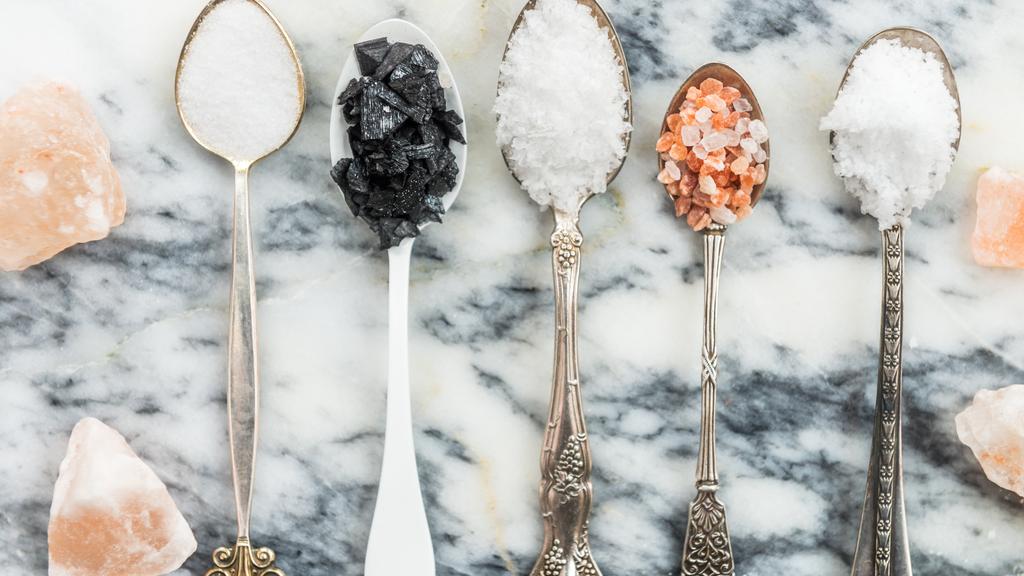
This article covers four major categories of salt including Kosher Salt, sea salt, table salt and flake salt. Each category will cover what that category of salt is, where it is produced, how it is processed and the advantages and disadvantages of using this type of salt. Additionally, this article will provide information on when to use each type of salt based on a variety of factors.
What is Kosher Salt?
Kosher Salt is the primary choice of many professional cooks due to its versatility. Its large grain size makes it easy to handle manually and creates better adhesion to foods, particularly proteins. In addition, Kosher Salt is free from iodine; therefore, its pureness produces a cleaner and stronger flavor compared to the iodized versions.
History and process
As stated earlier, the term "Kosher Salt" was named because it is used in the koshering process. During this process, Kosher Salt removes blood from meat thereby making the meat acceptable under Jewish law. As such, Kosher Salt must have a consistent grain size that is neither too fine nor too coarse. Due to the nature of Kosher Salt, its grain size is perfect for this purpose. The coarse texture also makes it easier to apply manually rather than relying on a saltshaker.
The method of harvesting Kosher Salt is primarily through evaporation. Therefore, there may be variations in production methods depending on where the salt is produced. Some of the well-known brands include Diamond Crystal and Morton. However, both of these brands produce Kosher Salt differently. Diamond Crystal has fewer crystals per volume; thus, you can be more liberal with the amount you use without fear of over-salting. On the other hand, Morton's crystals are packed more tightly together; thus, you need to be more conservative in your usage of the product.
When to use Kosher Salt
Kosher Salt is a great product for applying to raw meat prior to cooking. The coarse texture adheres very well to the protein and penetrates deep into the muscle tissue to create a more robust flavor. For example, when preparing a steak, apply a generous amount of Kosher Salt 30-60 minutes prior to cooking. The salt will cause the juices to be drawn to the surface of the meat and then reabsorb back into the meat as it dries, ultimately producing a nice crust when cooked.
Kosher Salt is also an excellent product to season vegetables prior to roasting. Simply toss sliced vegetables (such as potatoes or carrots) in olive oil and Kosher Salt. Roast at 425 degrees fahrenheit (220 degrees celsius). The results will be a much enhanced vegetable dish. The salt causes the moisture to come to the surface of the vegetables as they roast causing the vegetables to concentrate their flavors as they caramelize.
What is sea salt?
Sea salt is another type of salt that has become increasingly popular in recent years. There are several reasons for its growing popularity. First, sea salt is harvested directly from seawater. Second, the mineral content in sea salt varies greatly depending on its source. The mineral content in sea salt contributes greatly to its complex flavor and depth. Third, due to its diverse mineral composition, sea salt is becoming a favorite among chefs who seek to enhance their dishes with its unique character.
Varieties of sea salt
There are many varieties of sea salt available today. Fleur de sel is One of the most prized varieties of sea salt available today. Fleur de sel is harvested by hand from the surface of shallow pools of seawater. Its unique characteristic is that its crystals are formed on the surface of these pools rather than being raked or scraped off. Fleur de sel is characterized by its large, delicate crystals which provide a mild crunch.
Celtic sea salt is another widely used variety of sea salt. One of its distinguishing characteristics is that it retains much of its moisture. As a result, Celtic sea salt has a more textured appearance than most other varieties of sea salt. Furthermore, it contains clay particles from the salt pans which give it a distinctive grayish tint.
Trace minerals in sea salt
In addition to providing unique flavor profiles, the trace minerals present in sea salts contribute to the overall character of the final product. Many chefs believe that these trace minerals contribute to the uniqueness of their final products. Trace minerals in sea salts may include magnesium, calcium and potassium. Each One of these minerals adds slightly different dimensions to the final product.
Using sea salt
Due to its rich flavor and crunchy texture, sea salt is best used as a finishing product. Finishing products are those that are added just before service. Using sea salt in this manner showcases its full range of flavors and textures. An example would be sprinkling a pinch of Fleur de sel on top of a freshly baked tomato. Not only does the Fleur de sel complement the natural sweetness of the tomato, but it also adds a visually appealing element to the presentation of the dish.
Adding a sprinkle of Fleur de sel to Caprese salad consisting of fresh tomatoes, mozzarella cheese and basil leaves before adding balsamic glaze also showcases the ability of Fleur de sel to bring out the natural flavors in food. The slight sweetness inherent in Fleur de sel complements perfectly with the creaminess of mozzarella cheese and the tartness of balsamic glaze.
Practicality of Table Salt
Table salt is One of the most commonly used forms of salt. Although it has certain limitations, it remains One of the easiest forms to work with in terms of measuring. Its fine crystal structure makes it ideal for precision measuring as required in many recipes.
Production and characteristic
Unlike Kosher Salt which is often harvested naturally through evaporation or mining, table salt is created artificially through refining natural salt deposits. The process includes removing impurities and often fortifying with iodine to combat iodine deficiencies.
Fine grains make measuring easier
The anti-clumping agents added to table salt allow it to flow smoothly through shakers. Since these agents do not affect the taste of table salt, however, they can impact both the clarity and texture of brines and pickling liquids when clear liquids are desirable.
Using table salt
Due to its fine crystal structure and ease of measurement, table salt is ideal for baking. Fine crystal structures dissolve rapidly in liquid mixtures making it easy to incorporate evenly into doughs and batters.
Additionally, table salt works well in brines when attempting to prepare poultry for roasting. Dissolve 1 cup of table salt in 1 gallon of water and add spices and herbs. Submerge the poultry for several hours prior to roasting. The resulting effect will be increased retention of moisture and flavor during cooking.
Charm of flake salt
Flake salt is recognized by its large, irregularly shaped crystals which provide a satisfying crunch when broken apart. More than anything else flake salt is about the texture it brings to food. Maldon salt company is perhaps the most famous company associated with flake salt. They produce flake salts whose crystals are both pristine and pyramidal in shape.
Process of making flake salt
Maldon salt company produces flake salts by first boiling seawater then allowing it to evaporate slowly until large crystals develop. In contrast to other types of salt, flake salts rely on texture rather than quantity to achieve their intended goal.
Ease of crushing crystals
Crushing flake salts between your fingers is effortless. Due to its light weight and irregular crystalline structure, crushing flake salts between your fingers is quite flexible and can be done anywhere. Due to its relatively low density compared to other finely ground salts; therefore, a small amount of flake salt can weigh lightly on your scales.
Finishing product - flake salt
Flake salt is best utilized as a finishing product similar to sea salts. Regardless whether you plan on sprinkling flake salt onto a ripe tomato, soft boiled egg or chocolate cake; it will always provide an interesting combination of texture and flavor that transforms plain food into something special.
Sprinkle flake salt onto your finished dishes (e.g., grilled steaks or roasted chickens), not only will you add flavor but also an attractive visual element with its sparkling crystals shining brightly in the light.
Tips & tricks - measuring salts differently
Although measuring salts across different types can seem daunting at times, One thing that needs to be kept in mind is that all salts differ greatly in terms of their density levels. Thus, substituting One type for another can lead to unintended consequences. For example:
- 1 tsp table salt ≈ 1 ¼ tsp Diamond Crystal Kosher Salt
- 1 tsp table salt ≈ ¾ tsp Morton Kosher Salt
- 1 tsp table salt ≈ 1 ½ tsp coarse sea salt