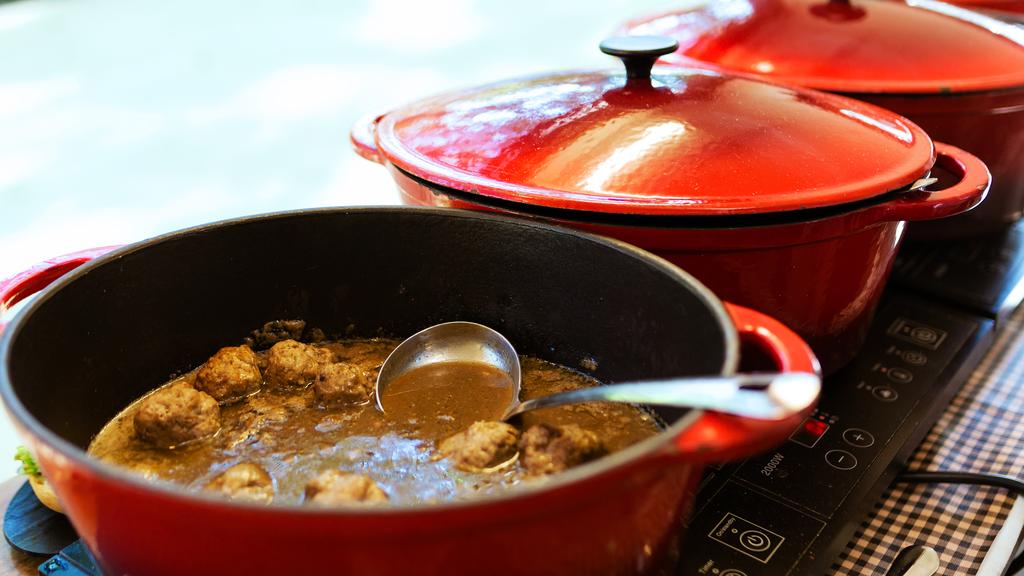
Understanding the basics of cooking is essential to any home cook. Wet-heat cooking, including methods such as braising, stewing, poaching, and simmering, provides endless opportunities for experimentation with food. By learning how to effectively braise, stew, poach, or simmer your foods, you'll increase your confidence and versatility in the kitchen.
Braising: Turning Tough to Tender
Braising uses low and slow heat to transform even the toughest cuts of meat into tender, fall-apart goodness. When you braise, you seal the meat in a pan and cook it in liquid in a covered vessel. The liquid combined with the low heat breaks down the connective tissue in meat like beef chuck, pork shoulder, and lamb shank.
How to Braise
First, select the correct type of meat to braise. Meats high in collagen work best in a braising recipe. Some examples include a 3-4 pound beef chuck roast, lamb shanks, and short ribs. Next season the meat with salt and pepper. In a heavy-duty pot or Dutch oven, heat a little oil until shimmering. Brown the meat evenly on all sides; this will usually take approximately 5 minutes per side. Browning creates a flavorful crust that helps keep the meat moist during the lengthy cooking time. Once browned remove the meat from the pot and put it aside. Put some diced onions, carrots, and celery into the pot and sauté them until they start to soften (approximately 5 minutes). These three ingredients provide the base of the flavors for your braise. Add two cloves of minced garlic and sauté for an additional 60 seconds. Remove the solids from the pot leaving behind any browned particles. Deglazing is critical because those browned particles contain much of the flavor for your dish. Add 1 cup of red wine to deglaze the pot scraping the bottom of the pan to release all of the browned particles. Reduce the red wine by half. Then add back the meat and add enough beef stock to reach midway up the sides of the meat. Add some fresh thyme sprigs, bay leaves, and a pinch of Worcestershire sauce for additional depth of flavor. Cover the pot and place it in a preheated oven at 300 degrees F. Cook for 2.5-3 hours. Rotate the meat every 30 minutes to ensure even cooking. After 2.5-3 hours test for doneness by inserting a fork into the meat. If it easily pierces it's done. Remove from heat and serve the braise with its juices, accompanied by something like mashed potatoes or polenta.
Stewing: Creating Comfort Food
A stew is essentially a one-dish meal that satisfies both physically and emotionally. Stewing involves completely submerging small chunks of meat and vegetables in liquid. This allows all ingredients to cook evenly and infuse each other with their flavors.
Making a Great Stew
Select your meat carefully, beef brisket, lamb shoulder, and chicken thighs are great choices. Cut your meat into equal sized cubes approximately 1 to 1.5 inches. Salt and pepper your cubes and dust them lightly with flour. The flour will aid in browning your meat and help thicken your stew. Heat a little oil in a large pot and brown your meat in batches. Don't overcrowd your pan or you'll end up steaming instead of browning your meat. Once browned, remove your meat from the pan and set aside. Sauté chopped onions, carrots, and potatoes in the same pot until softened (about 8 minutes). Add 1 tbsp of tomato paste and cook for another minute stirring constantly until it starts to darken. Return your meat to the pot and pour in enough beef or chicken stock to cover the ingredients by about an inch. Add herbs such as thyme or rosemary and a bay leaf. Place the stew on medium-high heat and bring it to a simmer then reduce heat to a simmer, cover and let it cook for 1.5-2 hours until your meat is very tender. Occasionally stir and skim off any scum or extra fat that rises to the top. Adjust seasoning before serving. If needed add salt, pepper, or a dash of vinegar for brightness.
Poaching: Cooking Delicately
Poaching cooks food using hot water, yet maintains the delicacy of ingredients. With poaching you're able to achieve tender food with minimal effort. The goal is to maintain consistent heat while preventing agitation in order to allow ingredients to cook without losing texture or absorbing unwanted flavors.
Cooking by Poaching
Create a flavorful liquid called a court-bouillon (water/white wine/onion slices/lemon/peppercorns/herbs). Heat this liquid until it reaches 160°F - 180°F. Using a reliable thermometer is crucial since poaching relies heavily on heat control. Add your protein (such as boneless/skinless chicken breasts/fillets of fish), making sure it's totally immersed in the liquid. Crack each egg separately into a small bowl prior to slipping into the liquid. Maintain steady liquid temperatures - no violent bubbles! Cooking times vary depending on what you are cooking: chicken breasts typically take 15-20 minutes; fish fillets may take 8-10 minutes; perfectly poached eggs are ready after four minutes for a runny yolk. Remove your protein from the liquid with a slotted spoon. Excess liquid will be drained away. Serve immediately or store chilled for later use in salads/sandwiches. Poaching produces moist/tender proteins that absorb the mild flavors of your poaching liquid.
Simmering: The Every Day Technique
Simmering is used daily in many kitchens for preparing soups/stocks/sauces/etc.. Its purpose is to maintain a consistent temperature below boiling point allowing flavors to combine and ingredients to cook slowly.
Achieving Success Through Simmering
Bring your liquid to a boil then reduce heat to maintain soft bubbles on top of the liquid. The optimal temperature range is 185°F - 205°F. Simmering is suitable for cooking lentils/beans/whole grains due to its ability to allow them to absorb liquid & soften slowly. Also ideal for developing richly flavored broths/stocks. Start with either water or stock as your base ingredient followed by aromatics (onions/carrots/celery etc.) then add protein/herbs, keeping your pot uncovered to allow excess liquid to evaporate & intensify flavors. Do not create a full-blown boil as it can result in toughened proteins & excessive loss of liquid leading potentially to burnt products if left unattended. Monitor & adjust temperature as required maintaining continuous action on surface without excessive bubble formation.
Simmering also relates to sauce reductions. For example; create a marinara sauce by heating together tomatoes/garlic/herbs at a boil then reduce heat & simmer until thickened (approximate hour). Determine Which Method is Right for You Each cooking method has specific attributes based upon your ingredients/time/desired outcome:
- Braising is most beneficial for tough cuts of meat that will have longer cooking times & thus become tender & rich in flavor. Examples of braised meals are beef bourguignon/coq au vin.
- Stewing serves best as a hearty dish combining protein/meat & vegetables within a robust/thick flavorful broth. Excellent examples are beef stew/Irish stew/chicken cacciatore.
- Poaching is suitable for delicate proteins that require gentle cooking, while still showcasing their natural flavors. Consider poached salmon/chicken for salads.
- Simmering is your everyday tool for creating soups/stocks/sauces. Classic examples include chicken noodle soup/home made broths.
Common Mistakes & FAQs
Preventing Overcooking
While all cooking techniques rely on slow cooking, overcooking occurs frequently when utilizing these techniques. Therefore monitoring progress is crucial. Utilize timers to track cooking times & always inspect product periodically during cooking periods; specifically when braising/stewing.
Consistent Heat Levels
Unstable heat levels can cause inconsistent cooking times; therefore invest in an accurate thermometer. Poaching techniques are dependent on precise heat levels as gentle temperatures are essential.
Frequently Asked Questions
Can I braise in a slow cooker?
Yes; however you sacrifice some of the value from the initial searing/browning step in your recipe. Adapt recipes by searing/profusely browning your meat/sautéing your vegetables on stovetop prior to placing all items into slow cooker & completing remainder of braising.
Why does my stew appear watery?
If your stew appears thin/watery attempt removing excess liquid via reducing on stovetop w/o lid; alternatively utilize slurry made from cornstarch & water or beurre manié (flour/butter paste).
What is best way to poach an egg?
Use fresh eggs as older eggs will expand upon entry into water. Add a tiny amount of vinegar into water to encourage whites to coagulate & create gentle whirlpool in water prior to introducing eggs