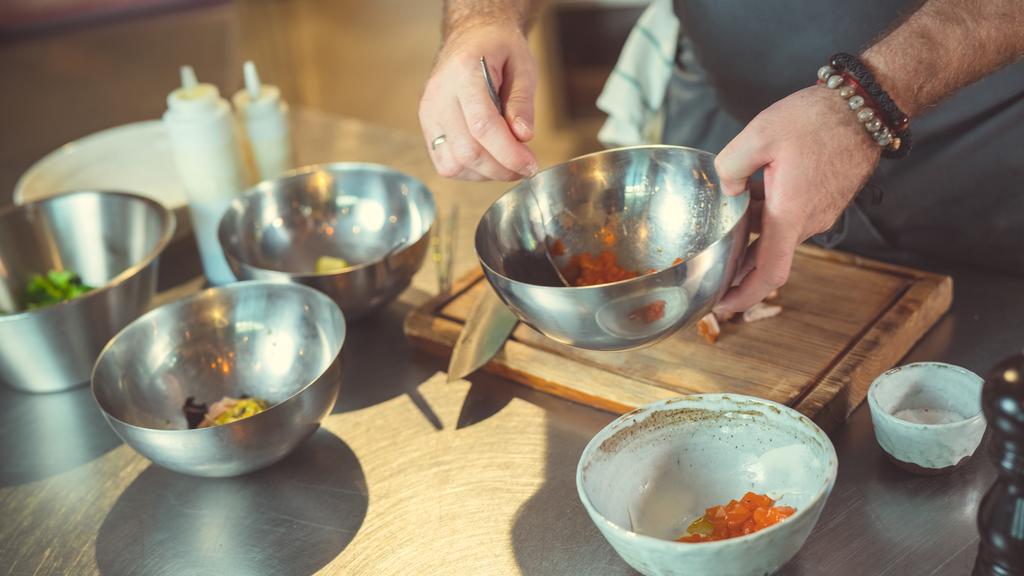
At its core, the idea of mise-en-place ("everything in its place") transforms the kitchen experience through enhanced organizational and forward-thinking practices that can completely transform the way you cook. The origins of the French term "mise-en-place" stem from professional kitchens, where efficiency and accuracy are primary concerns. That said, the benefits of applying this organized thinking to home kitchens can greatly increase the enjoyment of cooking, reduce stress levels while cooking, and create a much more fluid, enjoyable, and less chaotic experience overall.
Understanding the Scope of Mise-en-Place
While mise-en-place is fundamentally an arrangement of ingredients, it is much more than that. Mise-en-place represents a structured approach to cooking that emphasizes planning and mental preparation. Professional chefs utilize mise-en-place to ensure they have all of the required ingredients for a given dish. Additionally, chefs use mise-en-place to mentally prepare for the process of cooking. Doing so, enables chefs to avoid errors during times of stress and chaos. For home cooks, mise-en-place prepares the cook for a smooth flow of events while minimizing waste and enhancing enjoyment throughout the cooking process.
Why Mise-en-Place is Important
Imagine preparing a complex recipe without knowing whether or not you had all the necessary ingredients and/or utensils available. Not knowing could result in substituting ingredients last minute or rushing the preparation phase. Rushing through preparations may ultimately result in mistakes. Mise-en-place eliminates these problems by providing assurance that you have everything you need prior to beginning the preparation of a dish. Although eliminating errors is important, one of the most significant aspects of mise-en-place is enhancing efficiency. Since you will know exactly what you need to complete a task at hand, you can continue working on subsequent tasks without interruptions. Therefore, utilizing mise-en-place provides you with a defined focus and cadence to your cooking process. Ultimately, mise-en-place allows you to be fully engaged in your cooking process.
Safety Implications of Utilizing Mise-en-Place
Another benefit of mise-en-place is related to safety. Busy cooks who are distracted are more likely to suffer injuries. Using mise-en-place allows cooks to have fewer distractions and less rush while cooking. Thusly, cooks who utilize mise-en-place will be less likely to suffer cuts, burns, etc., while preparing meals. Lastly, mise-en-place also promotes consistency within your cooking. Consistency will allow you to reproduce successfully cooked dishes repeatedly.
Implementing Mise-en-Place in Your Kitchen
Utilizing mise-en-place in your kitchen will require you to think differently regarding recipes and cooking-related activities. However, incorporating mise-en-place into your daily routine can provide immense benefits. Below is a comprehensive outline to assist you in integrating mise-en-place into your daily routine:
Step #1: Perform A Detailed Reading Of Your Recipe Prior To Beginning Preparations
Before preparing a recipe, begin by performing a detailed review of the recipe from start-to-finish. Reviewing the entire recipe will enable you to spot potential areas of concern (such as equipment requirements or ingredients requiring additional preparation, i.e., soaking, etc.) that you would potentially overlook. Also, as you read through your recipe, visualize each step and make mental notes.
Step #2: Organize All Required Ingredients
After becoming familiar with your recipe, collect all the ingredients called for and position them on your counter top. Once you have gathered all the required ingredients, reviewing them collectively will allow you to confirm that you have all the required materials. Arrange the ingredients according to their usage in the recipe. Arranging them in this manner will be helpful when preparing large, multi-step recipes.
Step #3: Precisely Prepare Each Ingredient
Now that you have arranged your ingredients by their usage within your recipe, you can proceed with precisely preparing each ingredient. Rinse all fruits and vegetables thoroughly; remove any excess fat from meat products; peel or seed vegetables as needed; and cut or chop vegetables accordingly. When preparing vegetables for baking, ensure that each piece is uniform in size so that it cooks evenly. In baking specifically, precise measurements are critical, especially for dry ingredients such as flour and sugar due to slight variations creating different results.
Step #4: Gather And Position The Necessary Utensils & Equipment
Gather and organize all the tools and equipment necessary for completing your recipe. These can include various types of knives, cutting boards, pots/pans, spatulas, etc. Be sure that every tool/equipment item is clean and operational. If you plan on baking, be sure to preheat your oven to the specified temperature well ahead of time. Consider establishing timers for each stage of cooking to help stay on schedule.
Examples Of Real-World Applications Of Mise-en-Place
To illustrate how mise-en-place works in real-world applications of two popular cooking methods:
Example #1: Cooking A Stir Fry
Stir frying is a fast-paced method of cooking that relies upon high heat and quick motion to rapidly cook foods. Consequently, mise-en-place is essential. To facilitate stir-fries, cut vegetables uniformly in terms of size (bite sized), slice proteins thinly along the grain for tenderization, and in separate bowls measure out sauces/spices. Then simply place your preheated wok at approximately 400° F (200°C) with all ingredients immediately available to complete your stir fry with minimal interruptions resulting in perfectly browned and textured foods.
Example #2: Baking A Cake
Baking is one of the most exacting forms of cooking where ingredient proportions and cooking time are extremely important. Therefore, mise-en-place is vital when baking. Before mixing any batters, pre-measure all dry ingredients (flour/sugar/leavening agents/etc.), place them in separate containers. Allow eggs/butter to come to room temperature before mixing batters. Grease your cake pans ahead of time. Mise-en-place enables you to mix your batter quickly and efficiently without interruption thereby enabling even rise and texture.
Example #3: Cooking Risotto
Preparing risottos requires continuous attention and adding hot liquid gradually over time. Part of utilizing mise-en-place includes heating a portion of your stock in a saucepan adjacent to your risotto pan on low heat. Chop finely onions/garlic/grate Parmesan cheese. With all ingredients prepared ahead of time, you can then concentrate solely on the stirring and absorbing process associated with producing creamily textured risottos.
Common Mistakes Made During Mise-en-Place
Mistake #1: Misunderstanding The Order Of Ingredients
When preparing your ingredients based upon how they will be utilized within your recipe, do not confuse yourself by placing ingredients in random locations. Instead, group the ingredients by their usage in the recipe (i.e., all items used at once). Utilizing this system will improve efficiency and maintain a logical flow in your cooking.
Mistake #2: Neglecting Ingredient Quality
It is imperative that all ingredients be fresh and in excellent condition before commencing with meal preparation. Substandard spices/stale vegetables can adversely affect taste/flavor profile in the finished dish. Assess each ingredient as you prepare it.
Mistake #3: Inadequate Planning
Some ingredients require time to absorb flavors such as marinades/doughs. Account for any extended processing times in your planning when employing mise-en-place.
Mistake #4: Over-Crowding The Prep Area
Maintain a neat and organized workspace by avoiding overcrowding with multiple bowls/trays/etc.. Stackable containers are effective solutions for maintaining space when necessary.
Mistake #5: Failure To Clean As You Go
Clean-up while cooking will not only prevent messes/clutter from accumulating on your countertops/work surfaces but will minimize cleaning-up after the meal has been completed.
Frequently Asked Questions Regarding Mise-en-Place
Question 1: Do I Need Specialized Equipment?
No! Any container(s) suitable for storing and protecting your ingredients will suffice provided they meet the quantity and type requirements for your ingredients. Large platters/plates are suitable storage mediums for large portions of prepared vegetables/proteins. Organization is key, not cost!
Question 2: How Can I Maintain Mise-en-Place When Cooking For Multiple People?
When cooking for a crowd, maximize your mise-en-place by increasing ingredient batches and provide sufficient space for preparation. Use sheet pans for storing large amounts of food; designate an area for prepping items; enlist assistance if necessary to maintain movement.
Question 3: Is Mise-en-Place Useful For Non-Cooking Recipes?
Yes! While mise-en-place was developed primarily for use with traditional cooking recipes (e.g., sautéing/meat preparation), it can be effectively employed with other meal preparation methods including salads/sandwiches. Employing mise-en-place can improve efficiencies and inspire creative ideas related to presentation/ingredient pairing.
Benefits of Long-Term Application of Mise-en-Place
Upon implementing mise-en-place into your daily routine you will find that it produces more than just an organized kitchen. Long-term application of mise-en-place fosters improved cooking habits that cultivate mindfulness while preparing meals resulting in reduced stress levels and increased confidence. Furthermore, utilization of mise-en-place develops increased efficiency allowing you to prepare increasingly complicated meals.
Additionally, application of mise-en-place facilitates a greater relationship with food being prepared. With everything prepared ahead of time, you possess flexibility when adjusting recipes on-the-fly to suit individual tastes or attempting new techniques/culinary approaches that build upon previously acquired knowledge/experience.
Sharing Mise-en-Place with Family/Friends
Inviting family/friends to participate in mise-en-place activities transforms meal preparation into a collaborative event encouraging team efforts and providing opportunities for instructive experiences. Sharing meal preparation activities can be both an entertaining way to spend quality time with others while developing basic cooking skills among children/less-experienced cooks.
Conclusion
The adoption of mise-en-place as a methodology transcends mere technique; rather it represents an entirely new paradigm related to culinary development where meal preparation is transformed from laborious drudgery into an exciting experience filled with enjoyment and creativity. While initial investment of time yields short-term rewards (reduced stress/enhanced efficiency), long-term implementation offers continued growth through inspiration created via exploration of diverse culinary options.